

'The secret patterns behind string art' is one of our new teaching sequences for V9
- On the 'In this sequence' tab you'll find all the lessons in this sequence, a suggested implementation plan and curriculum alignment.
- The 'Behind this sequence' tab shows how key mathematical ideas develop over the sequence.
- Have you taught this sequence? Use the Feedback button to let us know how it went!
Lessons in this sequence

Task 1 • Terminating or recurring: sorting decimals
Students sort fractions according to whether their base 10 decimal representation terminates or recurs, then build and test a class conjecture about what determines whether a simplified fraction terminates.

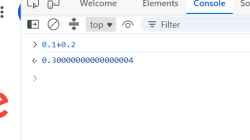
Task 2 • Why do computers get 0.1 + 0.2 wrong?
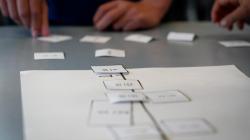
Students investigate how fractions are represented in binary, and discover that some fractions with terminating decimal representations in base 10 have recurring representations in binary. They build a conjecture for when a simplified fraction has a terminating representation in binary.
Task 3 • Decimals in different bases
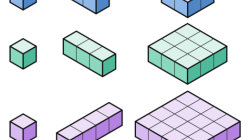
Students extend their investigations to other bases, building, testing, and refining a general conjecture for when a simplified fraction has a terminating representation in a given base.
The Australian Academy of Science supports and encourages broad use of its material. Unless indicated below, copyright material available on this website is licensed under a Creative Commons Attribution-NonCommercial-ShareAlike 4.0 International (CC BY-NC-SA 4.0) licence.
Curriculum and syllabus alignment
Year 8
By the end of Year 8, students recognise irrational numbers and terminating or recurring decimals.
Students begin this sequence by investigating which fractions have decimal representations that terminate in base 10 and which recur in base 10. Through sorting, testing, and looking for patterns, they build a class conjecture: a simplified fraction terminates in base 10 when its denominator contains no prime factors other than two and five.
In the second task, students explore why some computers cannot represent 0.1 exactly. This investigation leads them to binary representations of fractions, where they discover that some fractions that terminate in base 10 recur in binary. Students refine their conjecture, recognising that whether a representation terminates depends on both the denominator and the base in which it is written.
An optional third task extends this idea beyond base 10 and binary. Students test fractions across a range of counting systems, build and refine conjectures, and arrive at a general rule: a simplified fraction terminates in a given base when every prime factor of its denominator is also a prime factor of that base.
Across the sequence, students experience an important aspect of mathematical inquiry: initial conjectures are built from patterns, tested against counterexamples, revised when new evidence emerges, and gradually refined.
This sequence assumes familiarity with binary numbers, as covered in the Year 7 & 8 Digital Technologies curriculum (AC9TDI8K04). Specifically, students need to be aware of binary numbers, be able to read a binary number, and identify the value it represents. Converting or calculating in binary by hand is not required.
The first two tasks can be run as a complete two-lesson sequence on their own. The third task is designed as an extension for classes with sufficient time or interest to pursue the generalisation further.

'The secret patterns behind string art' is one of our new teaching sequences for V9
- On the 'In this sequence' tab you'll find all the lessons in this sequence, a suggested implementation plan and curriculum alignment.
- The 'Behind this sequence' tab shows how key mathematical ideas develop over the sequence.
- Have you taught this sequence? Use the Feedback button to let us know how it went!