

Teaching sequences for AC V9
Explore our new mathematics sequences with integrated professional learning. Flexible and adaptable to any classroom setting. Online, downloadable and free.
Filter Teaching Sequences
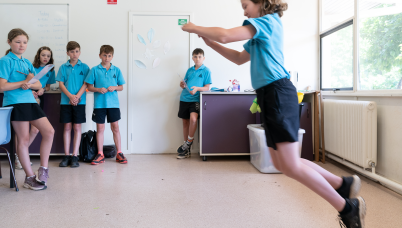


Statistics: How far can we jump?
Students investigate how far they can jump. They define their question, plan to collect and record data. They analyse this data and use it as evidence to answer the question.
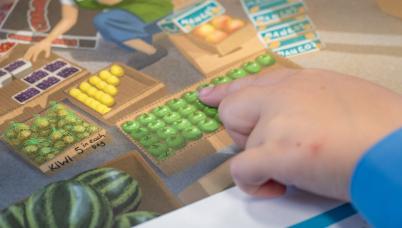
Multiplication: reSolve Market
Students learn that the array is a powerful representation of multiplication: rows and columns represent factors, and these factors can be multiplied to find the product.
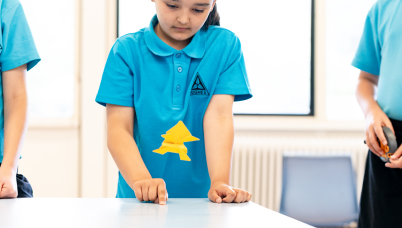
Statistics: Origami frogs
Students investigate how far an origami frog can jump. They define their question, plan, collect and record data. They analyse this data and use it as evidence to answer the question.

Multiplication: Trays of arrays
Students learn to use the properties of multiplication to solve multiplication problems which are represented as an array.
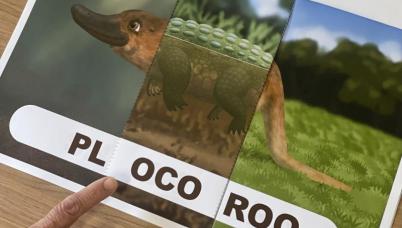
Multiplication: What is a Plocoroo?
Students use an animal flip book to explore the multiplicative idea of “for each” by determining the number of possible animal combinations, represented as a Cartesian product.
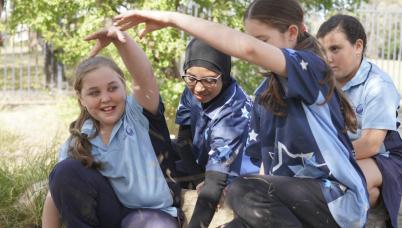
Statistics: Time to play
Students learn how to collect and analyse historical weather data, and use this data to make predictions about the best time to play outside at different times of the year.
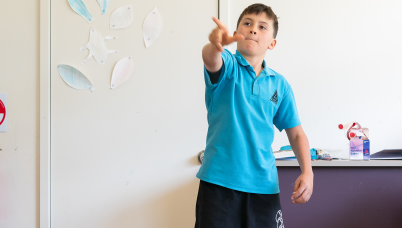
Statistics: Loopy aeroplanes
Students make loopy aeroplanes using different designs. They collect, represent and analyse data to answer the question "Which loopy aeroplane design is best?”.
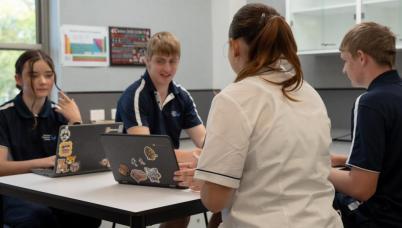
Mathematical modelling: Cracking codes
Students use mathematical modelling to explore codebreaking.

Mathematical modelling: Screentime footprint
Students use linear models to investigate how screen time contributes to carbon dioxide emissions. They consider their personal digital footprint and make predictions about future emissions.