

'Space: Supermarket networks' is one of our new teaching sequences for V9
- On the 'In this sequence' tab you'll find all the lessons in this sequence, a suggested implementation plan and curriculum alignment.
- The 'Behind this sequence' tab shows how key mathematical ideas develop over the sequence.
- Have you taught this sequence? Use the Feedback button to let us know how it went!
Lessons in this sequence

Task 1 • Supermarket navigation
Students simplify a supermarket layout into a network, using vertices and edges to represent movement and connectedness.
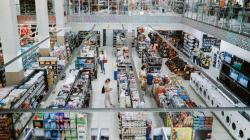

Task 2 • Network diagrams
Students investigate how many valid paths are possible through a supermarket network. They use pattern recognition, branching and decomposition into subnetworks to develop a systematic algorithm for generating, organising and counting all valid paths.
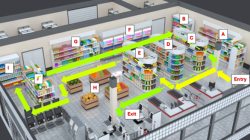
Task 3 • Shortest paths
Students explore weighted networks, where edges carry values representing distance. They compare routes by distance, test an algorithm for finding shortest paths, and use counterexamples to show that choosing the shortest next edge does not always find the shortest path.
Task 4 • Shortest path algorithms
Students revisit the greedy algorithm and identify why choosing the shortest next edge can fail. They co-construct a refined shortest-path method that compares total distances from the start, then apply it to weighted road networks to justify the quickest route.
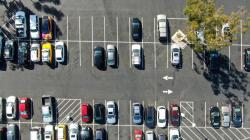
Task 5 • Modelling checkout queues
Students compare separate and shared checkout queues by modelling customer flow and waiting time, then use spreadsheet simulations to test different conditions and recommend an efficient system.

The Australian Academy of Science supports and encourages broad use of its material. Unless indicated below, copyright material available on this website is licensed under a Creative Commons Attribution-NonCommercial-ShareAlike 4.0 International (CC BY-NC-SA 4.0) licence.
Curriculum and syllabus alignment
Year 10
Students interpret networks used to represent practical situations and describe connectedness. They use deductive reasoning, theorems and algorithms to solve spatial problems.
Space
Interpret networks and network diagrams used to represent relationships in practical situations and describe connectedness
Design, test and refine solutions to spatial problems using algorithms and digital tools; communicate and justify solutions
This sequence develops the mathematical idea that networks are models for representing movement, connection and decision-making in real situations. In the context of a supermarket, students learn that a complex physical layout can be modelled into vertices and edges, and that once distances, times or queue conditions are attached to those connections, the model can be used to compare options, analyse efficiency and justify decisions. Across the sequence, students move from describing routes, to counting paths systematically, to finding shortest paths, and finally to using simulation to investigate how a checkout system performs under different conditions.
A second key idea is that the usefulness of a mathematical model depends on what is included, what is ignored, and how the situation is represented. Students begin by abstracting the supermarket into a network, then refine that model by adding weights to represent distance and travel time. They then develop and use structured rules and spreadsheet simulations to test the effect of service times and arrival patterns on waiting times. In this way, the sequence highlights that mathematics is not only used to represent a situation, but also to test, improve, and communicate solutions.
The sequence also foregrounds important mathematical processes. Students use abstraction to identify the essential structure of a problem, decomposition to break a complex situation into manageable parts, pattern recognition to organise and generalise results, and algorithm design and debugging to develop methods that work reliably across different networks and queueing situations. These processes align closely with computational thinking, while remaining grounded in mathematical reasoning, modelling and communication.

'Space: Supermarket networks' is one of our new teaching sequences for V9
- On the 'In this sequence' tab you'll find all the lessons in this sequence, a suggested implementation plan and curriculum alignment.
- The 'Behind this sequence' tab shows how key mathematical ideas develop over the sequence.
- Have you taught this sequence? Use the Feedback button to let us know how it went!