

Teaching sequences for AC V9
Explore our new mathematics sequences with integrated professional learning. Flexible and adaptable to any classroom setting. Online, downloadable and free.
Filter Teaching Sequences
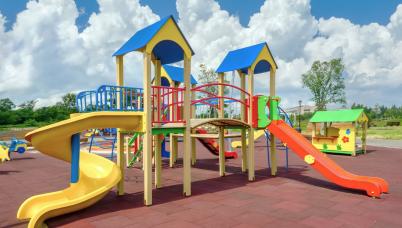

Statistics: Climb, slide or swing?
Students investigate the problem of designing a class playground that is fun for everyone. They plan, collect, record and analyse survey data to conclude what playground features students would like.
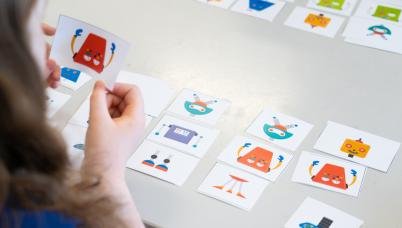
Multiplication: Building bots
Students build their understanding of multiplication by exploring the concept of “for each” through Cartesian product. They work out how many different robots can be built using three robot heads, three bodies and three types of legs.
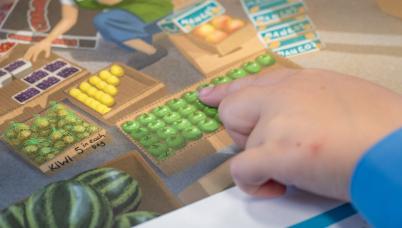
Multiplication: reSolve Market
Students learn that the array is a powerful representation of multiplication: rows and columns represent factors, and these factors can be multiplied to find the product.
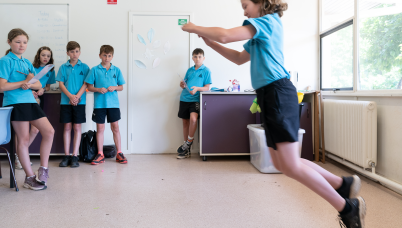
Statistics: How far can we jump?
Students investigate how far they can jump. They define their question, plan to collect and record data. They analyse this data and use it as evidence to answer the question.
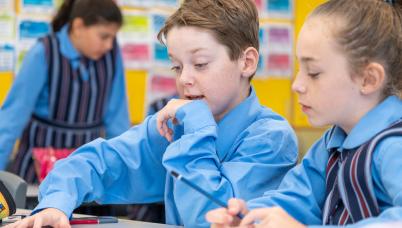
Multiplication: Trays of arrays
Students learn to use the properties of multiplication to solve multiplication problems which are represented as an array.
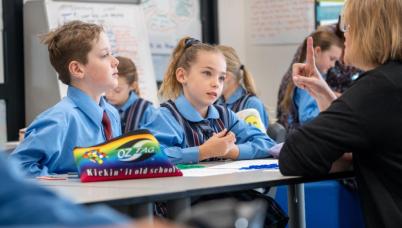
Number: Counting your odds and evens
Students navigate, design, and analyse number mazes to investigate why some paths always give an odd total and others don’t, building towards a general explanation of how odd and even numbers behave when added.
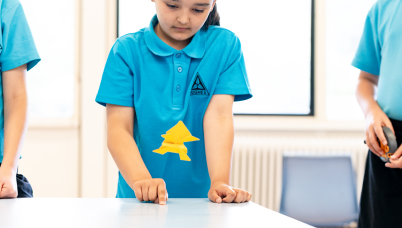
Statistics: Origami frogs
Students investigate how far an origami frog can jump. They define their question, plan, collect and record data. They analyse this data and use it as evidence to answer the question.
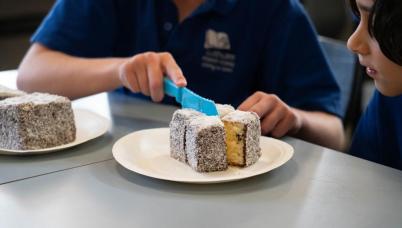
Fractions: Lamington slice
Students learn how fractions represent equal sharing and division, with the denominator showing the number of equal shares and the numerator showing the amount shared. Students explore fractions as sums of unit fractions.
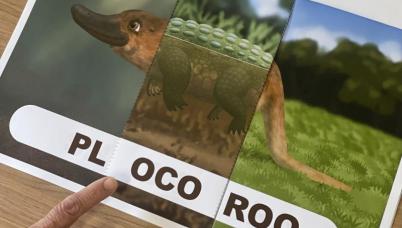
Multiplication: What is a Plocoroo?
Students use an animal flip book to explore the multiplicative idea of “for each” by determining the number of possible animal combinations, represented as a Cartesian product.
Statistics: Climb, slide or swing?
Students investigate the problem of designing a class playground that is fun for everyone. They plan, collect, record and analyse survey data to conclude what playground features students would like.
Multiplication: Building bots
Students build their understanding of multiplication by exploring the concept of “for each” through Cartesian product. They work out how many different robots can be built using three robot heads, three bodies and three types of legs.
Multiplication: reSolve Market
Students learn that the array is a powerful representation of multiplication: rows and columns represent factors, and these factors can be multiplied to find the product.
Statistics: How far can we jump?
Students investigate how far they can jump. They define their question, plan to collect and record data. They analyse this data and use it as evidence to answer the question.
Multiplication: Trays of arrays
Students learn to use the properties of multiplication to solve multiplication problems which are represented as an array.
Number: Counting your odds and evens
Students navigate, design, and analyse number mazes to investigate why some paths always give an odd total and others don’t, building towards a general explanation of how odd and even numbers behave when added.
Statistics: Origami frogs
Students investigate how far an origami frog can jump. They define their question, plan, collect and record data. They analyse this data and use it as evidence to answer the question.
Fractions: Lamington slice
Students learn how fractions represent equal sharing and division, with the denominator showing the number of equal shares and the numerator showing the amount shared. Students explore fractions as sums of unit fractions.
Multiplication: What is a Plocoroo?
Students use an animal flip book to explore the multiplicative idea of “for each” by determining the number of possible animal combinations, represented as a Cartesian product.