

Number: Counting your odds and evens
View Sequence overviewWe can recognise odd and even numbers in different ways.
We can notice patterns in odd and even outcomes across multiple examples.
We can make and test predictions about whether a sum will be odd or even without completing the full calculation.
Whole class
Counting your odds and evens Slides
Each student
Number maze Student sheet (printed onto A4)
Task
Show Slide 3 of Counting your odds and evens Slides to introduce the number maze.
Explain that students will move through the maze, adding numbers along their path, with the aim of finishing with an odd total.
Show Slide 4 and ask: What makes a number odd? What makes a number even?
At this stage, the focus is on noticing and identifying odd and even numbers, not on explaining why these properties hold.
- Even numbers can be divided by 2; odd numbers can’t be divided equally.
- Even numbers are in the 2 times table.
- Odd numbers end in 1, 3, 5, 7, or 9, while even numbers end in 0, 2, 4, 6, or 8.
- Odd and even numbers alternate as you count (odd, even, odd, even).
- When dividing by 2, even whole numbers leave no remainder, while odd whole numbers leave a remainder of 1.
- Zero is even (correct, but sometimes contested by students).
Show Slide 5 to introduce the number maze challenge.
Pose the challenge: You need to move from 5 at the start through to 14 at the end. You can only move to the right and down (no backtracking). Add together the numbers of each square you pass through. The aim is to finish with an odd total.
Slide 6 provides some example paths.
Representations of odd and even numbers
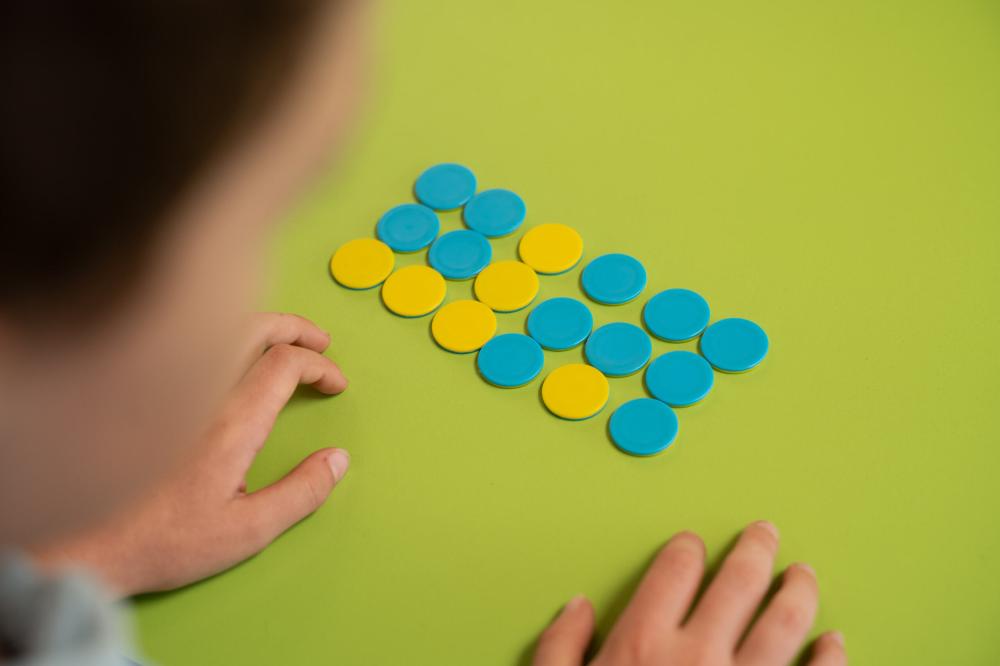
There are several useful ways to think about whether a whole number is odd or even, and each serves a different purpose.
Last digit: Noticing the final digit of a whole number is an efficient way to identify whether it is odd or even, particularly when scanning many numbers quickly. A whole number is odd if its final digit is 1, 3, 5, 7, or 9, and even if its final digit is 0, 2, 4, 6, or 8.
Divisible by 2: A whole number is even if it can be divided by 2 with nothing left over, and odd if dividing by 2 leaves a remainder of 1.
Pairs: A whole number is even if the objects it counts can be arranged completely into pairs, and odd if one object is always left unpaired.
Across this sequence, students may draw on any of these representations to construct their arguments. Each is mathematically valid, and each can support genuine reasoning about odd and even totals. The “convince me” activity in Task 3 is deliberately designed to accept any well-reasoned argument, regardless of which representation it draws on.
There are several useful ways to think about whether a whole number is odd or even, and each serves a different purpose.
Last digit: Noticing the final digit of a whole number is an efficient way to identify whether it is odd or even, particularly when scanning many numbers quickly. A whole number is odd if its final digit is 1, 3, 5, 7, or 9, and even if its final digit is 0, 2, 4, 6, or 8.
Divisible by 2: A whole number is even if it can be divided by 2 with nothing left over, and odd if dividing by 2 leaves a remainder of 1.
Pairs: A whole number is even if the objects it counts can be arranged completely into pairs, and odd if one object is always left unpaired.
Across this sequence, students may draw on any of these representations to construct their arguments. Each is mathematically valid, and each can support genuine reasoning about odd and even totals. The “convince me” activity in Task 3 is deliberately designed to accept any well-reasoned argument, regardless of which representation it draws on.
Using games and puzzles for deep mathematical thinking
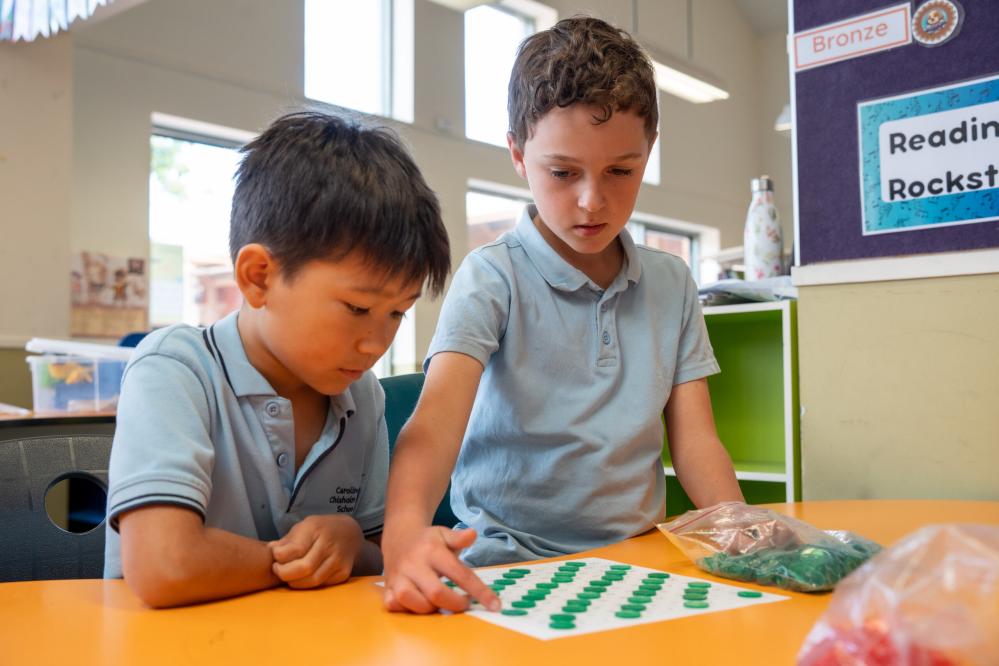
Games and puzzles can support learning in different ways. Some primarily offer repetition and practice, while others create opportunities for students to notice patterns, test ideas, and generalise mathematical relationships. When selecting or designing games, a useful question is: does progress in the task depend on attending to mathematical structure, or can it be completed through trial-and-error or brute-force calculation alone?
In this lesson, the number maze serves both purposes. As students move through the maze, they practise both addition and identifying odd and even numbers. A key pedagogical move is to shift attention away from calculating totals and towards explaining why a path works. Teachers can do this by pressing students to predict outcomes before adding, compare different paths that lead to the same result, and articulate what features of a path matter. In this way, the game becomes a vehicle for generalising the properties of odd and even numbers, rather than an end in itself.
Games and puzzles can support learning in different ways. Some primarily offer repetition and practice, while others create opportunities for students to notice patterns, test ideas, and generalise mathematical relationships. When selecting or designing games, a useful question is: does progress in the task depend on attending to mathematical structure, or can it be completed through trial-and-error or brute-force calculation alone?
In this lesson, the number maze serves both purposes. As students move through the maze, they practise both addition and identifying odd and even numbers. A key pedagogical move is to shift attention away from calculating totals and towards explaining why a path works. Teachers can do this by pressing students to predict outcomes before adding, compare different paths that lead to the same result, and articulate what features of a path matter. In this way, the game becomes a vehicle for generalising the properties of odd and even numbers, rather than an end in itself.
Provide students with Number maze Student sheet, which includes copies of the maze, and ask them to explore the maze and find paths with an odd total.
As they work, discuss some of the computational strategies that are being used.
If the arithmetic is getting in the way, consider:
- designing a maze with smaller numbers.
- having students work with a partner rather than reaching for a calculator, as keeping the mental effort of calculation is what motivates students to look for smarter strategies.
- Trial and error: picking a path, calculating the total, checking if it’s odd, then trying a different path if it’s not.
- Starting from the end: working backwards from 14, looking for a number that would give an odd total when added.
- Systematic path testing: methodically trying every possible path rather than choosing randomly.
- Tracking parity as they go: noting whether the running total is odd or even after each square, rather than calculating the full total first. This is the bridge into the reasoning work that follows.
Once students have found one pathway with an odd total, challenge them to find others. There are multiple ways through the maze that generate an odd total. Using different coloured pencils makes it easy to keep track of all the discovered paths.
Pose the challenge: Is it possible to know that your pathway will have an odd total without actually adding all the numbers? How do you know?
This challenge guides the remainder of the investigation.
Using a calculator
Calculators can help students who are genuinely struggling with the arithmetic get started on the task. However, using a calculator can limit the development of the reasoning this sequence is designed to support. A student who adds up all the numbers on a path using a calculator is likely to arrive at a total and check whether it is odd or even. The more powerful insight (that you can track whether your running total is odd or even after each square, without ever finding the exact total) is much less likely to emerge if a calculator is doing the arithmetic.
The cognitive effort of mental addition is actually productive here. It is what motivates students to look for shortcuts, and that search for shortcuts is where structural thinking begins. A student who finds the calculations burdensome is more likely to notice that even numbers can be ignored, or that only the odd numbers in a path matter.
If the task needs to be made more accessible, replacing the numbers in the maze with smaller single-digit values is a better option than introducing calculators. This keeps the arithmetic manageable without removing the conditions that make the reasoning strategies visible.
Calculators can help students who are genuinely struggling with the arithmetic get started on the task. However, using a calculator can limit the development of the reasoning this sequence is designed to support. A student who adds up all the numbers on a path using a calculator is likely to arrive at a total and check whether it is odd or even. The more powerful insight (that you can track whether your running total is odd or even after each square, without ever finding the exact total) is much less likely to emerge if a calculator is doing the arithmetic.
The cognitive effort of mental addition is actually productive here. It is what motivates students to look for shortcuts, and that search for shortcuts is where structural thinking begins. A student who finds the calculations burdensome is more likely to notice that even numbers can be ignored, or that only the odd numbers in a path matter.
If the task needs to be made more accessible, replacing the numbers in the maze with smaller single-digit values is a better option than introducing calculators. This keeps the arithmetic manageable without removing the conditions that make the reasoning strategies visible.
Why restrict movement through the maze?
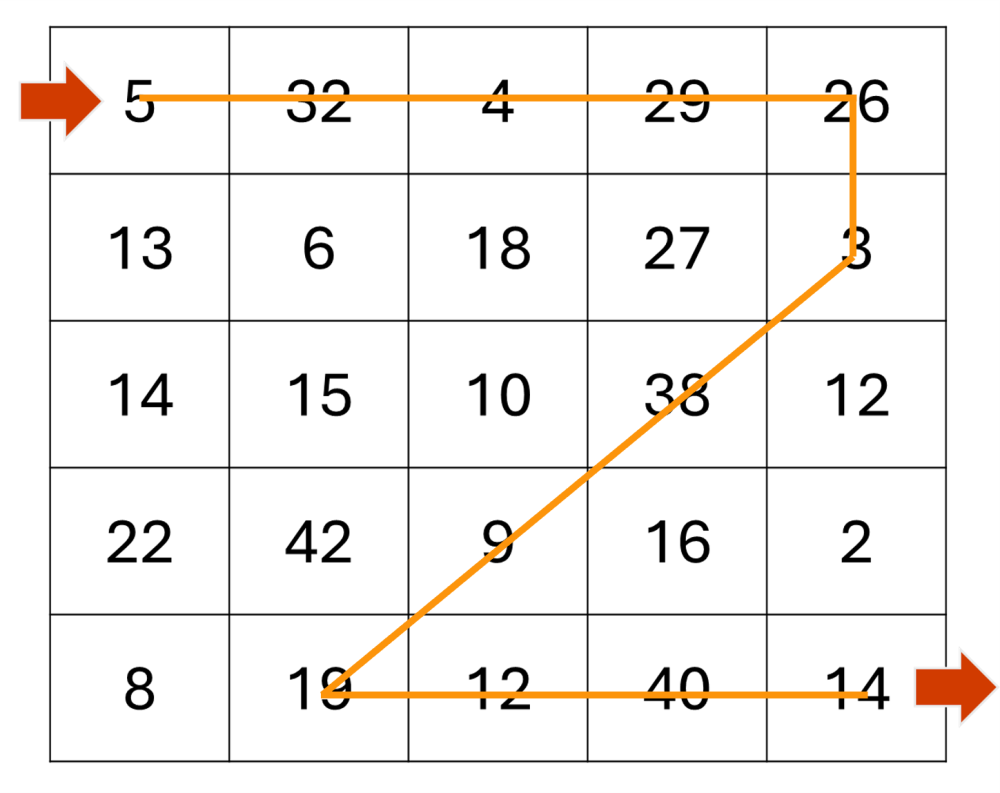
reSolve’s classic number maze task allows free movement through the maze, including backtracking and diagonal steps. This reimagined version of the task restricts movement to right and down only, which means that every possible path through the maze must pass through the same number of squares.
This is a deliberate application of variation theory: when too many things change at once, it is harder for students to isolate what is actually causing the outcome (Marton, 2015). By fixing path length, students can focus on a single variable—which numbers appear on the path— rather than also having to contend with how many numbers are being added.
The question of whether count matters is not ignored. It is saved for later in the sequence, when maze size changes and students can investigate that variable deliberately, with the core idea already in hand.
Reference
Marton, F. (2015). Necessary conditions of learning. Routledge.
reSolve’s classic number maze task allows free movement through the maze, including backtracking and diagonal steps. This reimagined version of the task restricts movement to right and down only, which means that every possible path through the maze must pass through the same number of squares.
This is a deliberate application of variation theory: when too many things change at once, it is harder for students to isolate what is actually causing the outcome (Marton, 2015). By fixing path length, students can focus on a single variable—which numbers appear on the path— rather than also having to contend with how many numbers are being added.
The question of whether count matters is not ignored. It is saved for later in the sequence, when maze size changes and students can investigate that variable deliberately, with the core idea already in hand.
Reference
Marton, F. (2015). Necessary conditions of learning. Routledge.
Challenge students to identify pathways that result in an odd total without calculating the full sum.
Checkpoint: After students have had time to find at least one path with an odd total, pause the class to select two or three students, who represent a range of approaches, to briefly share how they found their path.
If no student has yet moved beyond trial and error, you might ask: Did anyone notice anything about the numbers on paths that worked?
Return students to the task with the refined challenge: Find more paths with an odd total and try to predict whether a path will work before calculating.
Allow students time to further explore this idea. As they work, circulate and identify students with interesting approaches to share in the next discussion.
- Trial and error path testing: Students test several paths, calculate the total, and check whether it is odd or even. They may begin to notice that certain squares or combinations tend to produce odd totals but are not yet able to explain why. Watch for students who start to avoid or seek out particular squares as this suggests they are beginning to attend to structure even if they cannot yet articulate it.
- Tracking parity as they go: Rather than waiting until the end of a path, students note whether their running total is odd or even after each square. This is a significant step—it shifts attention from the total itself to how the total changes at each step.
- Ignoring even numbers: Students notice that passing through an even square does not change whether their total is odd or even and begin skipping those squares mentally.
- Counting odd numbers in the path: Rather than adding at all, students tally how many odd numbers appear in a path. They may not yet be able to explain why this works, but the strategy itself shows they have identified odd numbers as the relevant feature.
- Change/no-change reasoning: Students reason explicitly that adding an even number does not change whether the total is odd or even, while adding an odd number does. This is a more articulated version of ignoring even numbers.
- Generalised parity reasoning: Students articulate that a path will have an odd total if it contains an odd number of odd numbers, regardless of the specific values involved.
After sufficient exploration time, bring the class together again.
Checkpoints
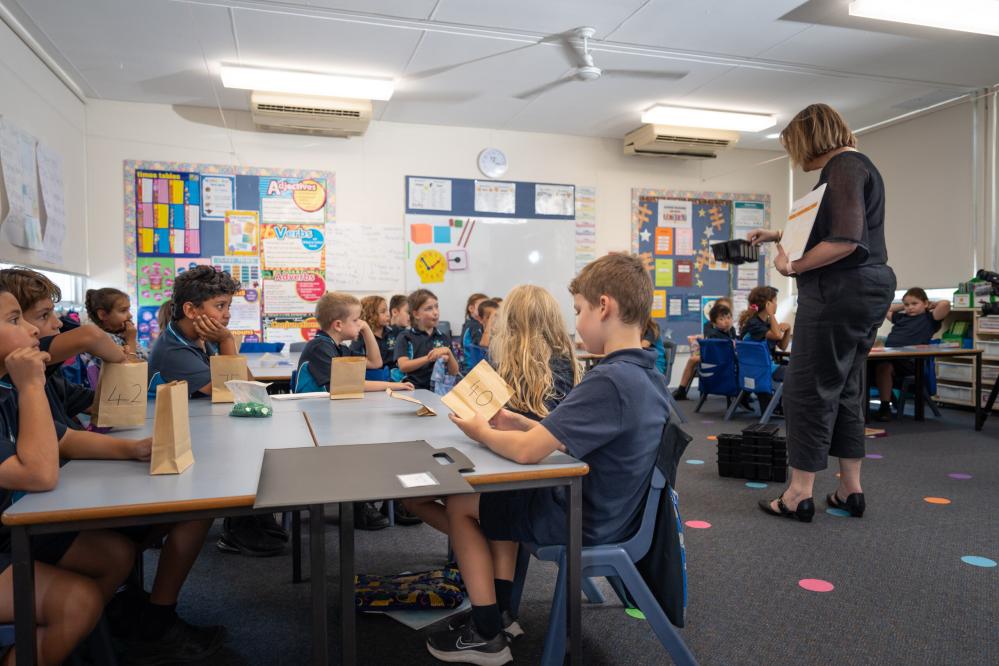
A checkpoint is a brief pause during an exploration phase where the class comes together to share interim progress. It is not a summary: the task continues afterwards. The purpose is to give students a chance to see how others are approaching the problem, surface useful ideas that have emerged, and maintain momentum.
In this task, the checkpoint serves two specific functions:
- it creates an opportunity to shift students who are still calculating every path in full towards noticing that some numbers matter more than others, without the teacher having to intervene individually with every group.
- selecting students to share in order from least to most sophisticated approach gives the whole class access to a progression of thinking, so that more advanced strategies feel like a natural next step rather than an unexplained leap.
A checkpoint is a brief pause during an exploration phase where the class comes together to share interim progress. It is not a summary: the task continues afterwards. The purpose is to give students a chance to see how others are approaching the problem, surface useful ideas that have emerged, and maintain momentum.
In this task, the checkpoint serves two specific functions:
- it creates an opportunity to shift students who are still calculating every path in full towards noticing that some numbers matter more than others, without the teacher having to intervene individually with every group.
- selecting students to share in order from least to most sophisticated approach gives the whole class access to a progression of thinking, so that more advanced strategies feel like a natural next step rather than an unexplained leap.
Invite selected students to share their approaches, ordering contributions from least to most sophisticated. The goal is not to evaluate strategies as right or wrong, but to compare how different approaches support reasoning about odd and even totals.
Draw out the following ideas if they have not already been generated:
- Even numbers in a path do not seem to affect whether the total is odd or even.
- The odd numbers in a path seem to be what matters.
Record these observations publicly.
Pose the question that will drive Task 2: If odd numbers are what matter, what could it be about odd numbers in a path that determines whether the total is odd or even?
Let students know they will investigate this in the next task.