

Place value: What’s in a number?
View Sequence overviewNumbers can be sorted and classified in different ways.
Numbers are made up of digits.
Whole class
What’s in a number? PowerPoint
Each group
Number cards to sort Student sheet
One of the following:
- Scissors (to cut out number cards)
- Sticky notes & pencil (to copy each number onto a sticky note)
A4 sheet of paper
Glue
Task
Set the scene by asking: What do you notice about the students in this class? Focus students’ attention on similarities that they share with others to establish the idea of noticing and comparing. Suggestions might include:
- hair colour
- long hair/short hair
- wearing shorts/not wearing shorts
- eye colour
- shoes (laces vs buckles, colour)
- canteen lunch/packed lunch
- walk to school/car/bus/bike
Ask: We are going to sort our class into groups. How could we decide to sort students who are similar in some way?
Invite students to physically form groups based on a feature they share with their peers. Once students are grouped ask students to form new groups based on a different feature. Change the focus feature several times to support students to recognise that ‘things’ can be classified in different ways.
Discuss:
- What do you notice that makes you the same?
- Why do the groups change when we use a different feature to sort each other?
- Classifying and sorting involves noticing specific features/attributes that make things similar and putting the things into groups based on these attributes. When a different attribute becomes the focus, the groups might change.
Explain that classifying and sorting are important skills used by mathematicians to organise things which are similar into groups. They sort numbers, shapes, objects, and even data by looking for similarities and differences.
Show slide 3 of What’s in a number? PowerPoint.
Pose the task: We are mathematicians and we are going to sort some numbers. I wonder how you could sort these numbers.
Sorting and classifying
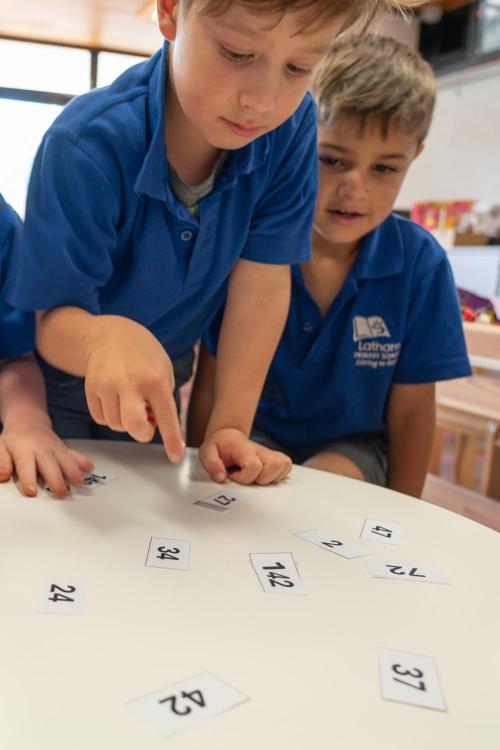
In this step we have encouraged students to explore ‘sameness,’ beginning with a familiar concept: themselves and peers. This is expanded later in the sequence when students explore ideas in place value.
Sorting and classifying are foundational reasoning skills. When students notice patterns, relationships, similarities and differences, they form generalisations that can be applied to solve similar problems. This ability to apply generalisations contributes to the building of strong foundations in problem-solving.
Teachers can foster these reasoning skills by creating opportunities for students to talk about how they see things as ‘similar’ or ‘different.’
In mathematics, classifying is used when:
- noticing patterns.
- grouping according to distinct attributes.
- identifying a collection or ‘set’.
The ability to reason mathematically develops in increasingly sophisticated ways, with tasks such as sorting and classifying forming an essential part of students’ development of these thinking skills. For example, consider the thinking skills needed to classify quadrilaterals into more specific categories when exploring two-dimensional shapes in upper primary.
In this step we have encouraged students to explore ‘sameness,’ beginning with a familiar concept: themselves and peers. This is expanded later in the sequence when students explore ideas in place value.
Sorting and classifying are foundational reasoning skills. When students notice patterns, relationships, similarities and differences, they form generalisations that can be applied to solve similar problems. This ability to apply generalisations contributes to the building of strong foundations in problem-solving.
Teachers can foster these reasoning skills by creating opportunities for students to talk about how they see things as ‘similar’ or ‘different.’
In mathematics, classifying is used when:
- noticing patterns.
- grouping according to distinct attributes.
- identifying a collection or ‘set’.
The ability to reason mathematically develops in increasingly sophisticated ways, with tasks such as sorting and classifying forming an essential part of students’ development of these thinking skills. For example, consider the thinking skills needed to classify quadrilaterals into more specific categories when exploring two-dimensional shapes in upper primary.
Divide students into pairs to work together. Provide each pair with Number cards to sort Student sheet and either scissors (for cutting out the number cards) or pencils and sticky notes (for copying out the numbers).
Allow students time to prepare (cut out/copy) the numbers to make a set of number cards and to find a way to sort their numbers into groups.
After sorting their numbers one way, challenge students to find a different way to sort the same numbers.
Invite students who are finding it hard to get started or who need some ideas to go on a spy walk, to give them chance to quietly observe their peers’ work and to get back on track.
- Do students sort their cards into groups based on:
- numbers that contain the same digit, e.g. 4 in 24, 34, 40, 47...?
- numbers that have a zero and numbers that don’t have a zero?
- one-, two- and three-digit numbers, e.g. grouping 2 and 7, 34 and 27, 140 and 142?
- odd and even numbers?
- place value, e.g. numbers that have a 4 in the tens place, a 7 in the ones place...?
- How are the numbers within a group similar and how are they different?
- The numbers in the group will be sorted based on one obvious similarity. There will be other similarities within each group as well. Prompt students to consider the numbers within the group more deeply. They may look at making smaller groups within the larger group.
- Are there any numbers that could fit in more than one group in your sort?
- Some numbers may fit into more than one group.
- These numbers (indicate specific numbers) all contain the same digit, but they are not the same number. Why?
- We want students to notice and articulate that although numbers might contain the same digit, the position the digit holds in the number changes the number’s value.
Provide each pair of students with A4 paper and a glue stick to make a labelled diagram showing one way that they sorted their numbers. Students should label each group with a title or an explanation of the category.
Select a few labelled diagrams for students to share during the Connect phase.
Face value vs place value
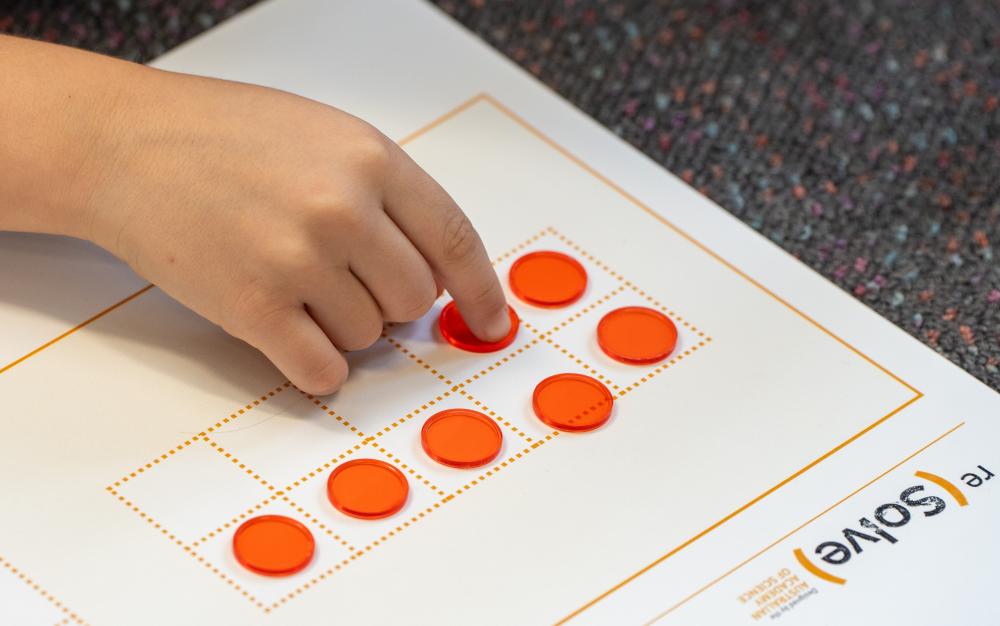
Through examining different ways to sort numbers, students are exploring the meaning of the ‘digits’ in numbers. They are developing an awareness that all numbers are made from the digits 0-9, and the position of the digit in a number communicates its value, while the digit itself represents the number of units in that position.
Students are developing their understanding of ‘10 of these is 1 of those’ to include 10 tens is 1 hundred. Therefore, this sequence should be preceded by rich concrete experiences in building 1 ten from 10 ones and 1 hundred from 10 tens to develop the idea of unitising lots of single items into one unit.
In this task, students connect earlier concrete experiences to numerical representations. They should be encouraged to articulate the meaning of the digits in the numbers. Teachers can draw attention to what students are communicating by modelling the correct terminology and drawing students in to investigate the ideas more deeply. Students compare the difference in value of digits, and the meaning assigned to those digits, based on position and a multiplicative relationship.
Example 1
The value of the digit 2 in the number 25 is 20. The value of the digit 5 is simply 5.
25 is made up of 20 and 5 ⇒ 25 = 20 + 5
25 is made up of 2 tens and 5 ones ⇒ 25 = 2 × 10 + 5 × 1
Example 2
The value of the digit 4 in the number 142 is 40. The value of the digit 1 in the number 142 is 100.
142 is made up of 100, 40 and 2 ⇒ 142 = 100 + 40 + 2
142 is made up of 1 hundred, 4 tens and 2 ones ⇒ 142 = 1 × 100 + 4 × 10 + 2 × 1
In this task, students may have grouped the numbers 27, 47, 207, 7, 70, 374, 72, and 37 together because “all of these numbers have a 7”. Discussions should draw students’ attention to the value of these numbers by focusing on how they are the same (7, the digit) but also how they are different (value).
Through examining different ways to sort numbers, students are exploring the meaning of the ‘digits’ in numbers. They are developing an awareness that all numbers are made from the digits 0-9, and the position of the digit in a number communicates its value, while the digit itself represents the number of units in that position.
Students are developing their understanding of ‘10 of these is 1 of those’ to include 10 tens is 1 hundred. Therefore, this sequence should be preceded by rich concrete experiences in building 1 ten from 10 ones and 1 hundred from 10 tens to develop the idea of unitising lots of single items into one unit.
In this task, students connect earlier concrete experiences to numerical representations. They should be encouraged to articulate the meaning of the digits in the numbers. Teachers can draw attention to what students are communicating by modelling the correct terminology and drawing students in to investigate the ideas more deeply. Students compare the difference in value of digits, and the meaning assigned to those digits, based on position and a multiplicative relationship.
Example 1
The value of the digit 2 in the number 25 is 20. The value of the digit 5 is simply 5.
25 is made up of 20 and 5 ⇒ 25 = 20 + 5
25 is made up of 2 tens and 5 ones ⇒ 25 = 2 × 10 + 5 × 1
Example 2
The value of the digit 4 in the number 142 is 40. The value of the digit 1 in the number 142 is 100.
142 is made up of 100, 40 and 2 ⇒ 142 = 100 + 40 + 2
142 is made up of 1 hundred, 4 tens and 2 ones ⇒ 142 = 1 × 100 + 4 × 10 + 2 × 1
In this task, students may have grouped the numbers 27, 47, 207, 7, 70, 374, 72, and 37 together because “all of these numbers have a 7”. Discussions should draw students’ attention to the value of these numbers by focusing on how they are the same (7, the digit) but also how they are different (value).
Spy walk
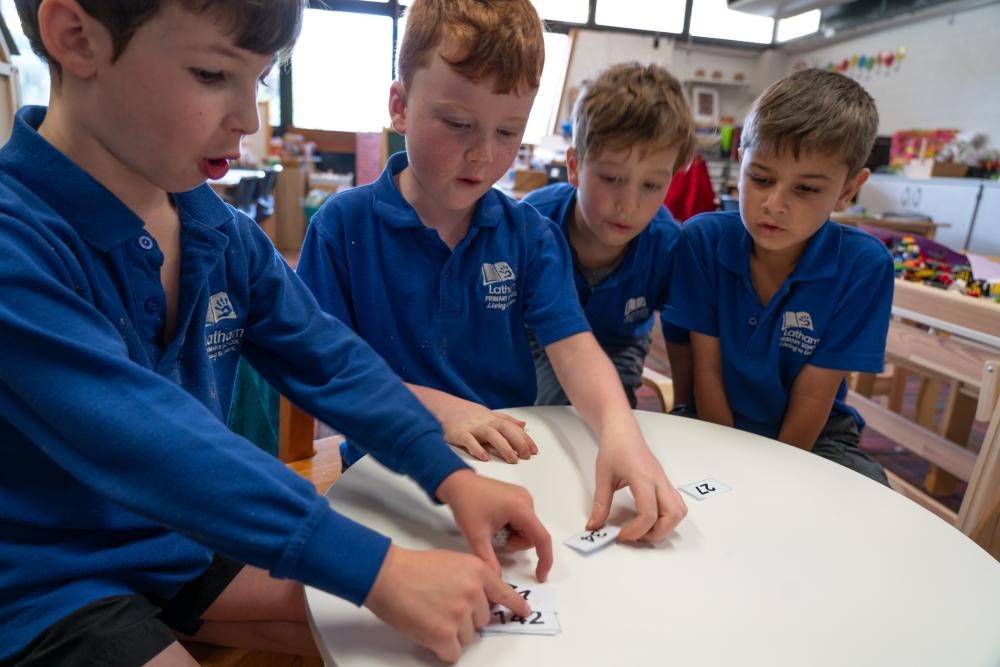
A spy walk is used here so that if students or the group are struggling for ideas, they can take the opportunity to notice how other students are sorting the numbers and could spark new thinking.
To make the walk purposeful, prompt students to notice:
- What numbers have been grouped together?
- What do you notice that is the same about these numbers?
- Can you describe a reason for these numbers being grouped together in this way?
- How would you explain the reason to a friend?
Such guidance supports deeper noticing and helps students to bring back specific insights and learn from the collective thinking of the class. When they return to their work, they do so with fresh insights and the chance to revise, extend, or refine their responses.
A spy walk is used here so that if students or the group are struggling for ideas, they can take the opportunity to notice how other students are sorting the numbers and could spark new thinking.
To make the walk purposeful, prompt students to notice:
- What numbers have been grouped together?
- What do you notice that is the same about these numbers?
- Can you describe a reason for these numbers being grouped together in this way?
- How would you explain the reason to a friend?
Such guidance supports deeper noticing and helps students to bring back specific insights and learn from the collective thinking of the class. When they return to their work, they do so with fresh insights and the chance to revise, extend, or refine their responses.
The purpose of this Connect phase is to for students to understand that:
|
Invite selected pairs of students to share how they sorted their numbers. Focus on the number properties used to sort. These may include:
- numbers that contain the same digit e.g. 4 in 24, 34, 40, 47....
- numbers that have the same digit at the start/end.
- numbers that do/don’t have a zero.
- numbers that contain the same number of digits.
- place value properties.
Focus students’ attention on place value properties by using the language of place value to describe the numbers sorted, e.g. tens place, value, worth 2 tens, etc.
Discuss:
- How are the numbers within your groups similar?
- The numbers will be sorted into groups based on one obvious similarity. Prompt students to consider the numbers within the group more deeply. For example, do they have 1, 2 or 3 digits, do they have the same digit, are the numbers made up of tens and ones, only ones, more than 10 tens etc.
- How are they different?
- The digits in the numbers may be the same but have different positions in the number so their value changes.
- Are there any numbers that could fit into more than one group in your sort? Why do they belong to more than one group?
Draw out and revoice some of the correct terminology when connecting the learning from this task. Encourage students to consider numbers that the position of a digit in a number gives it value, so the same digit has a different value in a number. For example, in 72 the digit 7 has a value of 7 tens, or 70, while in 17 it is worth 7 ones, or just 7 . Mathematical language is important—support students to use technical mathematical language.
Show slide 4 of What’s in a number? PowerPoint and discuss the groupings.
Talk moves (revoicing)
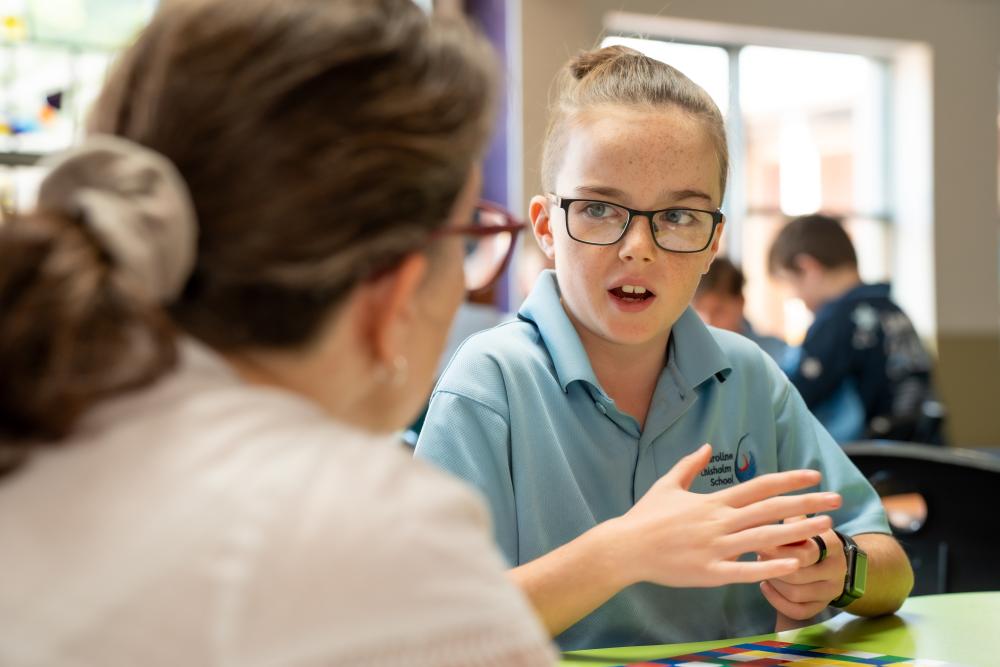
Talk moves are a powerful pedagogical tool for supporting rich conversations that foster deep and meaningful connections to mathematics content.
While a range of talk moves can be used for different purposes, revoicing is selected for this task where the teacher models the correct use of place value vocabulary during class discussion. This is to support students to connect everyday terminology with the highly technical language central to making sense of place value. For example: digit, place value, hundreds, ones and tens.
Revoicing can be effective tool used to promote rich powerful dialogue to support student sense-making within the classroom.
Talk moves are a powerful pedagogical tool for supporting rich conversations that foster deep and meaningful connections to mathematics content.
While a range of talk moves can be used for different purposes, revoicing is selected for this task where the teacher models the correct use of place value vocabulary during class discussion. This is to support students to connect everyday terminology with the highly technical language central to making sense of place value. For example: digit, place value, hundreds, ones and tens.
Revoicing can be effective tool used to promote rich powerful dialogue to support student sense-making within the classroom.
Explain: We can sort numbers into the same group when they are alike in some way. We must know why they belong in that group, so we know which numbers to put into the group and which ones to leave out.
You might choose to use concrete materials (such as pop sticks, ten frames, or Unifix cubes) to model some of the numbers on the sort cards. This helps students see how a digit’s position affects its value.